SEZER
Laktofriz Sezer 300 LIT

Laktofriz Sezer 300 LIT

Dostupno

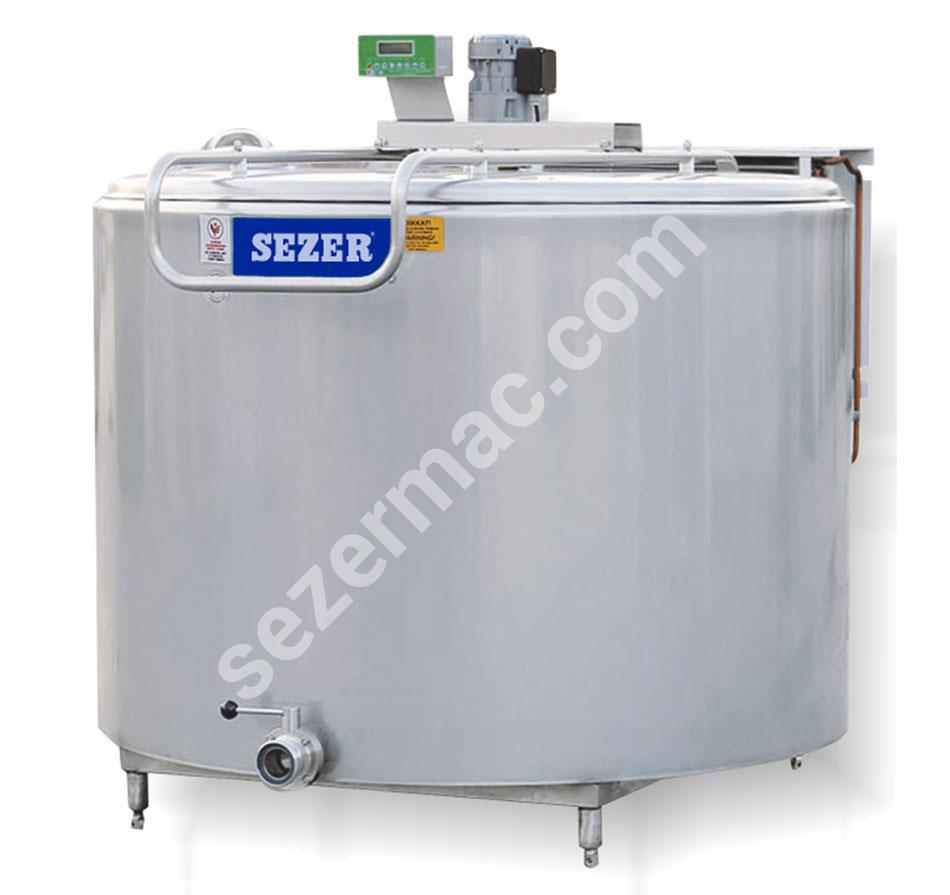
The Sezer 300-litre milk cooling tank is a vertical tank for cooling milk, made of AISI 304 stainless steel, with 60 mm polyurethane insulation. It's powered by a 1 HP (1.28 kW) compressor. Automatic washing is not available on this model.


The Sezer 300-litre milk cooling tank is a vertical tank designed for cooling and storing milk on the farm, made of AISI 304 stainless steel that resists corrosion and is easy to keep hygienic. Insulation is 60 mm of polyurethane, distributed through the tank's double-wall construction, class 2BII, ensuring efficient low-temperature retention with minimal heat loss. The first wall's bottom is 2 mm thick, the first wall's body is 1.5 mm, and the insulation wall is 1 mm AISI 304 steel, while heat transfer takes place via a 0.8 mm EP plate. Cooling is provided by a 1 HP (1.28 kW) compressor, sufficient for a tank of this volume. The evaporator is a Rollbond type, tested at 40 bar pressure, ensuring the reliability of the cooling system. Milk in the tank is continuously stirred by a stainless mixer with a 25 W, 25 rpm gearmotor, preventing fat separation and ensuring even temperature throughout the volume. Product is fed into the tank through a 200 mm opening, and the outlet is fitted with a DN50 butterfly valve (male), allowing quick, complete draining with no liquid residue. The lid works on a spring system, making it easier to open and close during daily use. Milk level is read via a manual measuring scale with 3-4 per mille sensitivity. The entire construction — tank mounted on a complete chassis — is welded using the Argon TIG process with polished joints, ensuring hygienic conditions with no sharp edges where residue could build up. Unlike the larger 500-litre model in the same range, which has automatic washing and a stronger 5 HP compressor, the 300-litre model has no automatic washing (manual cleaning is required) and is driven by a weaker 1 HP compressor, in line with the smaller volume of milk to be cooled. This makes it a more accessible choice for smaller farms with lower daily milk yield.